
Best Time to Visit Bisbee, AZ: Weather, Weekends, Events, and Seasonal Trade-Offs
Last updated August 2026, the best time to visit Bisbee is usually April to May or October to November. Those shoulder-season months give you patio weather, cooler high-desert air, and fewer weather interruptions than midsummer monsoon season. Timing your actual days matters too, because Bisbee feels much more open from Thursday through Sunday than it does early in the week.
Best Time to Visit Bisbee: At a Glance
April, May, October, and November are the strongest overall months for most travelers. Days are commonly in the 70s°F, which means roughly 21°C to 26°C (70°F to 79°F). That range works well for stair streets, patios, mine history, galleries, and a relaxed 2-day route. Bisbee also sits around 5,300 ft in the Mule Mountains, so it runs cooler than low-desert Arizona cities. That elevation is the main reason summer can still work here when Phoenix or Tucson feel too hot. Weekends matter almost as much as month choice. Plan Thursday through Sunday if you want restaurants, shops, music, and tours to feel active. Monday through Wednesday can be useful for empty-street photos, but it can also mean closed signs and fewer dinner options. Start with a Bisbee weekend plan if you want the simplest timing. Use a 2-day Bisbee itinerary when you need a tighter arrival-to-departure schedule.
- Best overall months: April, May, October, and November.
- Best budget and quiet months: January and February.
- Best heat-escape months: July and August, with monsoon caution.
- Best operating-window days: Thursday, Friday, Saturday, and Sunday.
- Riskiest casual arrival days: Monday, Tuesday, and Wednesday.
Season Comparison Table for Bisbee Weather, Crowds, and Costs
Season choice changes the whole trip. Spring and fall give the easiest walking weather. Summer brings a cooler mountain escape, but afternoon storms can interrupt outdoor plans. Winter can be bright and quiet by day, then cold after sunset. Costs follow demand more than temperature. January and February usually offer the best chance of lower lodging rates. October event weekends can push prices up and reduce room choice. The Bisbee Mining and Historical Museum's general admission of $10 is one fixed cost worth budgeting around, though it is worth confirming before you go since museum pricing can change. No single nightly hotel rate holds steady across 2026, so treat lodging as demand-sensitive rather than fixed and compare the same room across a quiet week and a busy weekend before booking.
| Season | Typical Weather | Crowd Pattern | Cost Signal | Best For | Main Trade-Off |
|---|---|---|---|---|---|
| Spring, March-May | Warm walking days, often around 21°C to 26°C (70°F to 79°F) in the strongest months | Peak-season feel on weekends | Higher than winter, especially Friday and Saturday | Patios, galleries, Queen Mine Tour planning, and stair walks | Popular weekends can tighten parking and room choice |
| Summer, June-August | Hotter days, with June described near 34.7°C (94°F) and monsoon months cooler after storms | Good for heat-escape trips from lower desert cities | Can vary by weekend demand | Clouds, summer evenings, and avoiding low-desert extremes | July and August bring frequent rain days and afternoon storm risk |
| Fall, September-November | Comfortable outdoor weather, with October often around 21°C to 26°C (70°F to 79°F) | Strong event demand, especially around the Bisbee 1000 | Event weekends can climb well above quiet winter demand | Hiking, outdoor events, stairs, and music weekends | Early booking matters for October |
| Winter, December-February | Sunny 10°C to 17°C (50°F to 63°F) days and cold nights near 2°C to 3°C (36°F to 37°F) | Quietest seasonal window | Best chance of lower lodging rates; museum baseline remains $10 | Low-key photography, history stops, and solitude | Evenings can feel cold, and some businesses may reduce hours |
Spring in Bisbee: March to May
Spring is the easiest answer for first-time visitors who want balanced weather. March starts the transition, while April and May usually deliver the best mix of daytime warmth and low rain risk. April typically reaches about 26.3°C (79°F) by day and drops near 9.6°C (49°F) at night. That swing is large enough to justify layers, even when the afternoon feels warm. Spring also works well if your plan includes stair streets, patios, small museums, and Lowell photography. Wildflowers bloom across the Mule Mountains climate zone during these weeks, adding color to the trip without forcing hot-weather timing. Book Friday and Saturday nights earlier than you would in winter. Peak-season weekends can make Old Bisbee parking feel tight. Consider arriving before dinner on Thursday if you want easier check-in and more restaurant flexibility. For activity planning, pair this season with a things to do guide so you can choose indoor backup stops before you arrive.
- Choose April or May for the cleanest weather-and-hours balance.
- Pack a light jacket because evenings can drop sharply after sunset.
- Reserve lodging before busy weekends instead of assuming walk-in availability.
- Use Friday or Saturday for galleries, dining, and live music.
- Save Lowell and Erie Street photos for quieter daylight hours.
Summer in Bisbee: June to August
Summer is not the overall best season, but it has a clear use case. Choose it when you want a cooler Arizona escape from the lower desert. Bisbee’s elevation makes it milder than Phoenix-style heat, but it is still summer. June is the hottest month of the year in Bisbee, with an average daytime high near 34.7°C (94°F). July and August bring the monsoon pattern. The key travel issue is afternoon storms, which tend to build around the 3:00 PM window. Kupi’s weather data for the area reports about 12 rainy days in July and 11 rainy days in August. That does not mean every day is ruined. It does mean morning plans are safer for stairs, viewpoints, and tours. Heat plus humidity can also make Bisbee’s steep streets feel harder than the raw temperature suggests. Schedule outdoor walking early, then leave museums, shops, and hotel breaks for later. Check Discover Bisbee before departure for current visitor information, because tour times and event calendars can change.
- Start stair walks and outdoor photos before midday.
- Treat 3:00 PM as a storm-risk planning marker in July and August.
- Book morning Queen Mine Tour times when summer rain is in the forecast.
- Carry water even though Bisbee is cooler than the low desert.
- Keep dinner plans flexible if storms slow parking or walking.
Fall in Bisbee: September to November
Fall rivals spring as the best overall season. September can still feel warm, but October and November are strong months for walking, events, and cooler evenings. Average highs settle into the 70s°F sweet spot, or about 21°C to 26°C (70°F to 79°F), during these months. Those temperatures suit stair climbing better than June heat or winter nights. Fall also has the biggest event trade-off. The Bisbee 1000 Stair Climb is the major October draw that reshapes the whole month's calendar. That event can create large crowds and a serious booking crunch. Book lodging roughly 6 months ahead for that weekend. Event seekers may love the energy, but quiet-weekend travelers should avoid the same dates. Sidepony Express Music Festival and the Mariachi Festival are two more music-focused reasons to track the calendar before booking. Confirm exact 2026 dates through official tourism channels before buying nonrefundable lodging. The Visit Arizona site is a useful statewide starting point for trip context.
- Pick October or November for outdoor comfort.
- Book far ahead for Bisbee 1000 weekend.
- Avoid major event dates if you want quiet restaurants and easier parking.
- Use Thursday arrival for a smoother fall weekend.
- Bring a layer for evening temperature drops.
Winter in Bisbee: December to February
Winter is the best season for solitude and a lower-key budget trip. Days can still be useful for walking, especially when the sun is out. Winter daytime highs typically run around 10°C to 17°C (50°F to 63°F). Nights can drop near 2°C to 3°C (36°F to 37°F), and freezing nights are possible. Snow is rare, but it can happen. Winter is a good fit if you care more about history stops, quiet streets, and photography than late-night energy. It is less ideal if you expect every boutique, gallery, and restaurant to keep peak-season hours. For things to do in Bisbee in winter, lean on the museum, the Queen Mine Tour, and Lowell's Erie Street rather than late-night plans, and check current hours before leaving Tucson or Phoenix. Pack warmer layers than the daytime forecast suggests. A fleece or insulated jacket matters after dinner, especially if your lodging sits uphill from Main Street. For lodging trade-offs, compare historic hotels with other local stays in the Bisbee lodging guide before you pick a quiet winter base.
- Use January and February for the quietest feel.
- Expect cold nights even when afternoons are sunny.
- Check restaurant hours before arriving on a weekday.
- Choose lodging close to your dinner plans if nighttime walking is a concern.
- Keep a flexible plan in case winter weather briefly affects roads.
Bisbee Arizona Weather by Month: What Matters Most
Average temperature in Bisbee, AZ by month only tells part of the story. Bisbee’s main planning issue is the gap between day and night. April can feel warm by afternoon, then brisk after sunset. Winter can offer a sunny walk at noon, followed by near-freezing evening air. Summer adds a different pattern. June is hot and dry compared with the monsoon months. July and August bring more frequent rain days, so early starts become more valuable. Spring and fall win because they reduce both extremes. You still need layers, water, and shoes with grip. Old Bisbee is built for walking, but it is not flat. Stair streets can turn a casual stroll into a workout. That matters more in heat, humidity, or winter darkness. Plan fewer stops if you are visiting with anyone who dislikes steep grades.
| Month Group | Temperature Signal | Rain Signal | Planning Move |
|---|---|---|---|
| January-February | Around 10°C to 17°C (50°F to 63°F) by day, with cold nights near 2°C to 3°C (36°F to 37°F) | Some winter wet days are possible | Pack warm layers and verify weekday hours |
| March-May | April can reach about 26.3°C (79°F) by day and 9.6°C (49°F) at night | Rain is generally low in April, May, and June | Book weekends early and keep evenings layered |
| June | June can reach about 34.7°C (94°F) | Drier than peak monsoon months | Walk early and avoid exposed stairs in peak heat |
| July-August | Warm to hot, but often cooler than low-desert Arizona | About 12 rainy days in July and 11 in August are reported | Schedule outdoor plans before afternoon storm risk |
| September-November | October often fits the 21°C to 26°C (70°F to 79°F) comfort range | Rain drops again by October and November | Watch event dates before booking lodging |
| December | Mild days and cold evenings | Winter rain is possible | Use indoor history stops as backup |
The Midweek Trap: Weekday vs Weekend in Bisbee
The biggest mistake is choosing the right month and the wrong weekday. Bisbee is a weekend town. Thursday through Sunday is the safest window for shops, galleries, restaurants, tours, and evening energy. Friday and Saturday are the liveliest nights. Monday through Wednesday can feel very different. Many small galleries and boutique restaurants may close or reduce hours. That can be fine if your goal is quiet photography, Erie Street scenes in Lowell, or empty stairways. It is frustrating if you arrive hungry and expect broad dinner choice. The practical compromise is simple. Arrive Thursday afternoon, use Friday and Saturday for Old Bisbee, then leave Sunday after breakfast. If you must visit midweek, call key restaurants and check tour availability before you drive. Avoid building the whole trip around a single dinner spot unless you have confirmed hours.
A quiet Monday can still work for a photo-first trip, but in July and August the 3:00 PM storm marker makes morning the safer window before reduced dinner choices become the second constraint.
- Thursday: best arrival day for a full weekend without the Saturday rush.
- Friday: strong for galleries, dinner, and live music.
- Saturday: fullest town feel, but also the hardest parking day.
- Sunday: good for a slower morning and departure.
- Monday-Wednesday: best for quiet photos, not broad dining choice.
Annual Events and When to Book Around Them
Events can make Bisbee feel alive, but they can also define your whole weekend. The Bisbee 1000 Stair Climb is the clearest example. It is the biggest October event on the calendar, and lodging should be booked roughly 6 months ahead. That timing matters because Old Bisbee has limited historic lodging and tight street parking. Bisbee Pride lands in June, which adds another reason to check calendars before assuming summer will be quiet. Music-focused travelers should also watch for the Mariachi Festival and Sidepony Express Music Festival. Event weekends are best when the event is the point of the trip. They are weaker when you want flexible dining, last-minute lodging, and low crowds. Always confirm current dates through official event or tourism pages before booking. If your dates are fixed, reserve lodging first, then build restaurants and tours around that location.
- Bisbee 1000 Stair Climb: October, with roughly 6 months of advance lodging booking recommended.
- Bisbee Pride: June, with event-weekend demand to consider.
- Mariachi Festival: check current dates before booking.
- Sidepony Express Music Festival: check current dates before booking.
- Non-event weekends: better for easier rooms, dinner timing, and parking.
Queen Mine Tour, Museums, and Indoor Timing
The Queen Mine Tour is one of Bisbee’s key history draws, and tickets can sell out on weekends. Advance booking is the safest move, especially in spring, fall, and event periods. Summer adds a weather reason to book early. Morning tours reduce your exposure to afternoon monsoon interruptions. Check current Queen Mine Tour hours and ticket availability a few days before you go, since weekend slots fill fastest. The Bisbee Mining and Historical Museum gives you a useful indoor anchor. Reported museum hours run 10 AM to 4 PM daily, with general admission at $10 — treat those details as planning inputs, then verify both before you go because operating details can change. Indoor stops are especially useful in winter evenings, hot June afternoons, and July-August storm windows. Keep one indoor backup on each day of your itinerary. That backup prevents one closure or one storm from derailing the whole visit.
For October event trips, tour planning starts before arrival: the Bisbee 1000 note points to 6 months for lodging, while weekend Queen Mine tickets can also sell out. Lock the stay first, then use museum hours as the flexible backup.
- Book Queen Mine Tour tickets ahead for weekends.
- Choose morning tour times in summer.
- Use the museum as a heat, cold, or rain backup.
- Budget $10 for museum general admission, and confirm the current rate before you go.
- Verify current hours before departure.
Parking, Lodging, and the Cost Side of Timing
Parking pressure follows the same pattern as crowds. Saturday afternoons and event weekends are the hardest windows in Old Bisbee. Thursday arrivals are easier because you can park, check in, and walk before the weekend fills. Winter weekdays are the quietest, but you trade that ease for fewer open businesses. Lodging also tracks demand. January and February usually offer the best chance of lower rates. April, May, October, and November attract more visitors because the weather is easier. October event weekends can become the most restrictive. No single verified nightly rate applies across all of 2026, so don't assume a fixed price swing. Instead, compare the same room across a winter weekday, a spring Saturday, and an October event weekend. That direct comparison shows the real spread for your dates. Where you stay also shapes your timing. Old Bisbee's historic hotels, including the Copper Queen Hotel and The Bisbee Grand, put you within walking distance of Main Street's restaurants and galleries, which matters most on Thursday-through-Sunday nights when you want to walk back after dinner rather than drive. Lowell takes a different lodging approach built around vintage trailers rather than traditional hotel rooms, a better fit for travelers focused on the Erie Street scene than on late-night walkability. Either way, book earlier for spring and fall weekends and for the Bisbee 1000 weekend specifically, since both districts have a limited number of rooms. If you want to add nearby stops, save them for the quieter edges of the trip with 7 Best Day Trips From Bisbee: Southern Arizona Guide rather than cramming them into Saturday.
- Arrive Thursday if you want easier parking.
- Avoid Saturday afternoon arrivals during major events.
- Compare lodging rates across at least 3 date types before booking.
- Stay close to Main Street if you dislike uphill evening walks.
- Use Sunday or Monday for nearby drives after the weekend peak.
Common Timing Mistakes to Avoid
Most Bisbee timing mistakes are preventable. The first is treating Arizona weather as one thing. Bisbee’s 5,300 ft setting changes the temperature pattern, but it does not remove summer heat or winter cold. The second is forgetting the day-night swing. A warm afternoon can turn into a cold walk back after dinner. The third is arriving Monday without confirmed restaurants. That mistake turns a good-weather trip into a limited-choice trip. Another issue is underestimating the stairs. Old Bisbee rewards walking, but summer heat, monsoon humidity, and winter darkness all make steep routes harder. Finally, do not book an October weekend without checking the event calendar. A festival or stair climb can be exactly what you want. It can also be the reason every convenient room is gone.
- Do not pack for Phoenix and assume Bisbee will feel the same.
- Do not skip layers, even in spring and fall.
- Do not arrive early week without checking dinner hours.
- Do not schedule long stair walks at peak summer heat.
- Do not ignore October event dates when booking lodging.
Best Months by Traveler Type
Different travelers should choose different windows. First-time visitors should pick April, May, October, or November. Those months make the fewest demands on your packing list and itinerary. Budget-focused travelers should look at January and February, then verify hours before booking. Heat-escape travelers from Tucson or Phoenix can use July and August, but they should front-load outdoor plans before storms build. Event travelers should choose October for the Bisbee 1000 or June for Pride, then book early. Photographers who want empty streets can use weekday mornings, especially in winter or shoulder season. Food-focused visitors should avoid Monday through Wednesday unless they already have confirmed open restaurants. Outdoor walkers should avoid the hottest June hours and respect the stair-town layout. Bisbee rewards flexible timing more than rushed checklists.
| Traveler Type | Best Timing | Why It Works | Watch-Out |
|---|---|---|---|
| First-time visitor | April-May or October-November | Best balance of weather, activity, and daylight | Book popular weekends early |
| Budget traveler | January-February | Quietest months and best chance of lower lodging demand | Cold nights and reduced weekday hours |
| Heat-escape traveler | July-August | Cooler than low-desert Arizona and more dramatic skies | Afternoon monsoon storms |
| Event seeker | June or October | Pride and the Bisbee 1000 shape the calendar | Higher demand and tighter parking |
| Photographer | Weekday mornings | Empty streets and Lowell scenes are easier | Fewer open shops and restaurants |
Which Matters More: The Season or the Day You Arrive?
Most guides treat weather and weekday as two separate questions. In practice, the two interact, and one usually outweighs the other depending on what a given trip actually needs.
A traveler who lands in Bisbee on a warm April Tuesday gets close to ideal weather and a half-empty town, which is great for photos but frustrating if a specific restaurant or gallery was the point of the drive. A traveler who arrives on a cold January Saturday gets a fully operating town, with shops, kitchens, and tours running as usual, even though the evening temperature drops toward freezing. Between those two scenarios, weekday timing is usually the bigger risk to the trip. Bisbee's weather rarely closes anything outright; even a monsoon afternoon just pushes plans indoors or earlier in the day. A Monday arrival, by contrast, can genuinely close the restaurant or gallery a visitor built the day around.
The practical takeaway is to protect the weekday first if only one variable can be controlled. Choose Thursday through Sunday, then fit the season around that window rather than the reverse. The one group that should flip this order is the photographer or the visitor who wants Old Bisbee and Lowell nearly empty; for that goal, a quiet Tuesday beats a crowded Saturday every time. Everyone else, including first-time visitors, food-focused travelers, and anyone booking a Queen Mine Tour slot, comes out ahead by treating the day of the week as the harder constraint and the season as the more flexible one.
Old Bisbee vs. Lowell: Time Each Area Differently
Old Bisbee and Lowell reward different timing. Old Bisbee is the better choice from Thursday through Sunday, when Main Street shops, galleries, restaurants, and bars are most likely to feel active. It is also where parking pressure builds fastest on Saturday afternoons and event weekends.
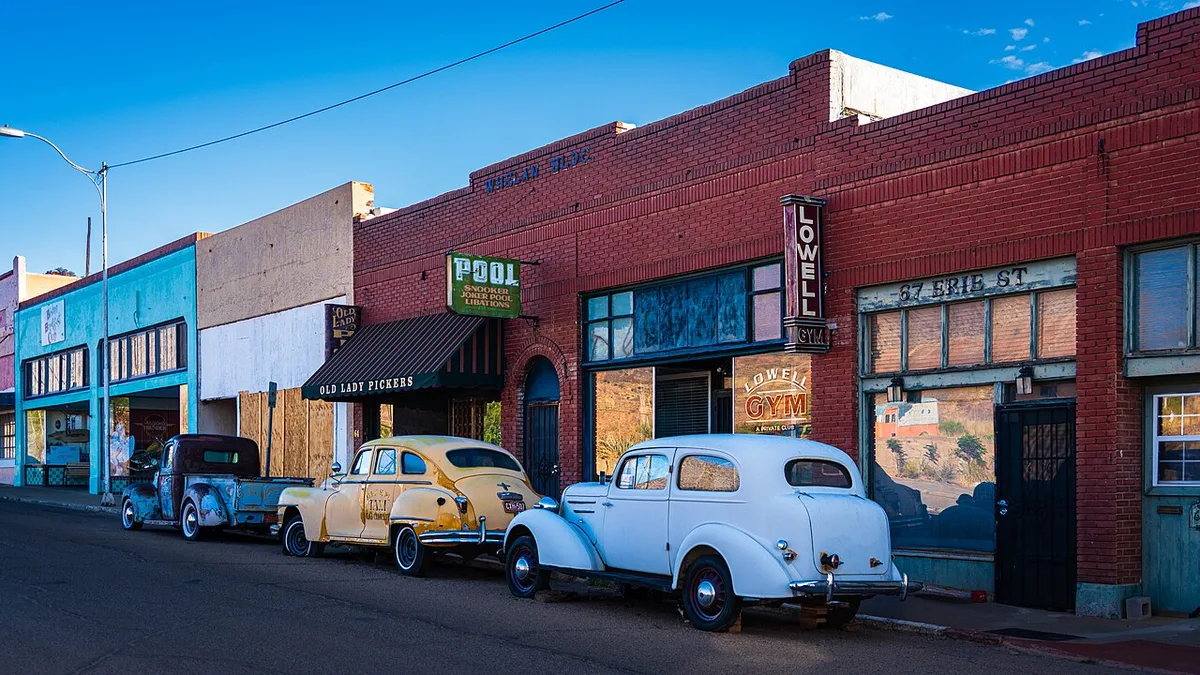
Lowell is different. The small district along Erie Street is more about photography, vintage storefronts, classic cars, and a quieter roadside scene. It does not depend as much on boutique shopping hours, so it can work well on a Monday, Tuesday, or Wednesday.
- Use Old Bisbee for dinner, galleries, live music, the Queen Mine Tour, and historic hotel stays.
- Use Lowell for daytime photos, especially when Old Bisbee is crowded or partly closed.
- Visit Lowell in the morning or late afternoon for easier light and less harsh pavement glare.
If you only have one day, prioritize Old Bisbee on a weekend. Add Lowell as a short side stop before leaving town.
Frequently Asked Questions
What is the best month to visit Bisbee?
April, May, October, and November are the best overall choices. These months usually bring comfortable walking weather, stronger weekend activity, and fewer monsoon disruptions.
Is summer a bad time to visit Bisbee?
Summer can work if you plan around heat and storms. June can reach about 34.7°C (94°F), while July and August bring frequent monsoon rain days.
Is Bisbee open during the week?
Bisbee is open during the week, but the visitor experience is thinner Monday through Wednesday. Many small shops, galleries, and restaurants may reduce hours or close.
When should I book for the Bisbee 1000 Stair Climb?
Aim to book lodging about 6 months ahead of the October Bisbee 1000 weekend. That event affects lodging, parking, and restaurant availability.
What should you pack for Bisbee weather?
Pack layers in every season. Bisbee can have warm afternoons and much colder nights, including winter lows near 2°C to 3°C (36°F to 37°F).
Is winter worth it in Bisbee?
Winter is worth it for quiet streets, history stops, and lower-demand lodging periods. Expect sunny 10°C to 17°C (50°F to 63°F) days and cold evenings.
Which days are best for a Bisbee weekend trip?
Thursday through Sunday is the best window for most visitors. Arrive Thursday, use Friday and Saturday for Old Bisbee, then leave Sunday after breakfast.
Does Bisbee get monsoon storms?
Yes, July and August are the key monsoon months. Plan outdoor walks early and keep indoor backups for the afternoon.