

Best Time to Visit Monterey
Last updated August 2026, the best time to visit Monterey is usually September through November for clearer skies, mild afternoons, and fewer summer expectations. Winter is better for gray whale migration and lower hotel pressure, while summer works best when you plan around fog, crowds, and Monterey Car Week.
Best Time to Visit Monterey: Quick Answer
Choose fall if weather matters most. September averages about 21°C (70°F), while October averages about 20°C (68°F), based on the official weather pattern summarized by See Monterey. Those months also sit after the heaviest summer fog pattern and before January and February rain becomes a bigger planning factor. For wildlife, December through April is the gray whale window, with January and March noted as peak months. For lower costs, look at winter midweek stays and avoid the August car-event period. For a short first trip, pair this timing guide with a Monterey weekend plan so you do not overpack the calendar.
- Best overall weather: September and October, when highs run near 21°C (70°F) and 20°C (68°F).
- Best whale-watching season: December through April for gray whales, with humpbacks strongest from March through November.
- Best budget window: winter weekdays, especially outside holiday weeks and major event dates.
- Hardest booking window: Monterey Car Week, scheduled across August 7-16, 2026 in the official event calendar.
- Best fog strategy: plan indoor mornings in June and July, then keep outdoor plans flexible for midday or afternoon.
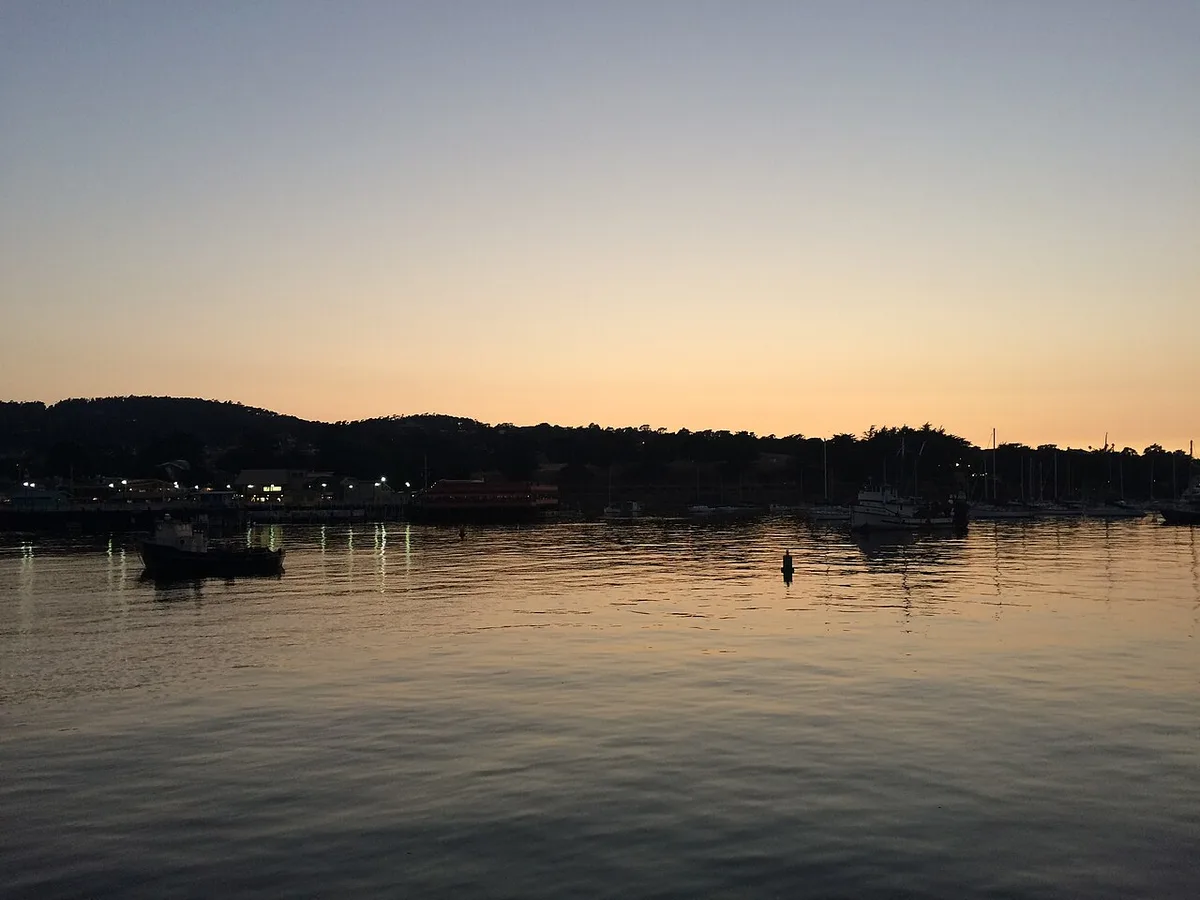
Season Comparison Table
Monterey rewards travelers who pick a season for a specific purpose. Do not treat the coast like inland California. Summer can be cooler and grayer than expected, while fall often gives you the clearer version of the trip many visitors imagine. The same seasonal pattern holds across Monterey County, so a season chosen for Monterey also shapes day trips into Pacific Grove, Carmel-by-the-Sea, and Big Sur.
| Season | Typical Weather | Crowds and Prices | Best For | Watch Outs |
|---|---|---|---|---|
| Winter, December-February | Cooler days around 14°C (58°F) to 16°C (60°F), with January and February among the wettest months. | Usually the softest lodging period of the year, outside holidays. | Gray whales, monarch butterflies, quieter Cannery Row walks, Old Fisherman’s Wharf visits. | Pack rain layers and expect boat conditions to matter. |
| Spring, March-May | Mild days near 16°C (61°F) to 17°C (63°F), with rainfall tapering after March. | Moderate demand, with event weekends affecting rooms. | Wildflowers, Whalefest, early humpback sightings, coastal walks. | Check current festival dates before booking nonrefundable lodging. |
| Summer, June-August | Cool coastal highs near 18°C (65°F) to 20°C (68°F), with marine-layer mornings. | High demand, especially during Car Week. | Aquarium mornings, inland heat escape, family trips, major festivals. | Do not expect hot beach weather, and book early for August. |
| Fall, September-November | Warmest coastal stretch, with September near 21°C (70°F) and October near 20°C (68°F). | Better value than peak summer, except major event weekends. | Clear-sky drives, Jazz Festival, monarch arrival, vineyards, 17-Mile Drive. | Evenings cool quickly, so pack layers. |
Fall: September to November for Clearer Skies
Fall is the strongest all-around answer for most visitors. September and October bring the warmest coastal averages of the year, with highs near 21°C (70°F) and 20°C (68°F). This makes 17-Mile Drive, Cannery Row walks, and Pacific Grove shoreline time easier to schedule without building the day around fog. Monterey Jazz Festival is listed for September 25-27, 2026 at the Monterey County Fairgrounds, and Visit California event coverage also frames it as a major September cultural draw. Book that weekend early if music is your reason for coming. If not, choose nearby September or October weekdays for more room flexibility.
- Pick September for the warmest average high, around 21°C (70°F).
- Pick October if you want clearer days plus the beginning of monarch season in Pacific Grove.
- Use November for quieter cultural travel, but pack for cooler nights around 8°C (47°F).
- Pair fall with a things to do guide if you want outdoor plans and backup museum time.
Winter: December to February for Whales and Lower Pressure
Winter trades beach expectations for wildlife and easier planning. December through April is the gray whale migration window, and January is called out as a peak month by Monterey wildlife guidance. Highs sit near 14°C (58°F) in December and January, then about 16°C (60°F) in February. Rain is the main compromise. January averages 4.40 inches of precipitation in the official weather table, and February averages 4.05 inches. That makes waterproof layers more useful than heavy winter clothing. Pacific Grove’s Monarch Grove Butterfly Sanctuary is also a winter reason to come, with monarchs arriving in October and remaining into February.
- Book a whale-watching morning, then keep the afternoon flexible for weather.
- Visit Monarch Grove Butterfly Sanctuary between October and February.
- Use Old Fisherman’s Wharf and Cannery Row as low-driving options when showers move through.
- Compare lodging areas with where to stay before choosing a cheaper inland room.
Spring: March to May for Wildflowers and Wildlife Changeover
Spring is a good compromise when you want wildlife without winter rain risk. March averages about 16°C (61°F), April about 17°C (62°F), and May about 17°C (63°F). Rain drops sharply after March, from 3.38 inches in March to 1.49 inches in April and 0.56 inches in May. Gray whales are still possible through April, while humpbacks become stronger from March through November. Whalefest, a free two-day event centered on Old Fisherman’s Wharf and Custom House Plaza, is a strong spring planning hook for wildlife-focused travelers. For 2026, official event listings showed Whalefest on April 11-12. Future dates should be checked before you lock flights or lodging.
- Choose March if whale watching is still the priority.
- Choose April for Whalefest timing and lower rain than March.
- Choose May for a milder shoulder-season trip before summer crowds build.
- Add Pacific Grove if you want the April-to-June purple carpet, the local name for the ice plant bloom along the Monterey Bay Coastal Recreation Trail.
Summer: June to August for Aquarium Time, Fog, and Car Week
Summer is useful, but it needs realistic expectations. June averages about 18°C (65°F), July about 19°C (66°F), and August about 20°C (68°F). Those numbers explain why visitors expecting hot California beach days can be surprised. Marine-layer mornings are common, and coastal fog may sit over downtown Monterey and Carmel before burning off around midday. Use foggy mornings for Monterey Bay Aquarium, Cannery Row, or breakfast near the waterfront. Save 17-Mile Drive, beach walks, and viewpoints for the clearer part of the day. Monterey Car Week is the major August warning. Official 2026 listings run from August 7-16, with free events like the August 7 kickoff and paid events such as a $15 1-day pass or $30 3-day pass at one collector expo. That range shows how August can swing from free public viewing to paid, high-demand planning very quickly.
- Book far ahead for August 7-16, 2026 if Car Week is your goal.
- Avoid that period if you want calmer roads and simpler hotel choices.
- Use Aquarium mornings when June Gloom blocks early views.
- Check current MST Trolley status before relying on its typical May-to-early-September seasonal schedule.
- Use a 2-day Monterey itinerary if summer fog forces you to reshuffle plans.
Best Time for Whale Watching in Monterey
Monterey's whale watching season is not a single-season decision. The better question is which species you most want to prioritize. Gray whales are tied to December through April, with January and March highlighted as peak sighting months. Humpback whales peak from March through November. Blue whales are best from July through October. Killer whales are strongest from mid-April to mid-May and late August through October. Those windows make winter and spring better for migration-focused travelers, while late summer and fall suit travelers chasing variety. Weather still matters. Boat trips can feel colder than the street forecast, even when the afternoon high reaches 20°C (68°F).
| Wildlife Goal | Best Window | Planning Note |
|---|---|---|
| Gray whales | December-April | January and March are the peak sighting months. |
| Humpback whales | March-November | Spring through fall gives you the broadest window. |
| Blue whales | July-October | Pair with fall weather if clear skies matter too. |
| Killer whales | Mid-April-mid-May and late August-October | Late August overlaps the Car Week pressure period. |
Best Time for Budget Travelers
Budget travelers should treat winter weekdays as the first search window. Winter is consistently the period with the lowest hotel rates across Monterey County, while August brings the strongest booking pressure because of Monterey Car Week. Room rates move too quickly to quote a single reliable figure here, so do not plan a budget around an old price you saw elsewhere. Check hotel calendars directly, then compare the same room type across a winter weekday, a fall weekday, and the August 7-16, 2026 Car Week window. Use event costs as a second pressure signal. The official calendar includes free Car Week entries and paid options, including a $15 1-day pass and a $30 3-day pass at one collector expo. Lodging can move much more sharply than those entry prices, so book refundable rooms early if August is unavoidable.
- Search Sunday through Thursday nights first in December, January, and February.
- Avoid holiday weeks if your goal is the lowest room pressure.
- Compare Monterey, Pacific Grove, Seaside, and nearby areas before committing.
- Use direct hotel calendars, not stale travel articles, for 2026 room decisions.
Best Time for Families and First-Time Visitors
Families often do best in summer or spring, but the reason differs. Summer gives you school-break timing and easy indoor backups at Monterey Bay Aquarium when fog sits in. Spring gives you Whalefest, mild temperatures, and fewer peak-summer crowd issues. First-time visitors who can travel outside school breaks should choose fall. You get the clearest weather odds and easier outdoor pacing. A balanced first trip can include Cannery Row, Old Fisherman’s Wharf, Pacific Grove, and one scenic drive. Add Carmel-by-the-Sea or Big Sur only if you have another day. For longer stays, use Monterey day trips to separate road time from your core coastal days.
Summer can fit school breaks, but it is not all equal: fog makes Aquarium mornings useful, while August 7-16, 2026 brings Car Week demand. Families who do not care about cars should shift earlier or choose spring.
- Choose spring for school calendars that allow April or May travel.
- Choose summer for Aquarium-first trips and fog-proof planning.
- Choose fall for first-time adults who care more about weather than school breaks.
- Keep one indoor block on every family itinerary, even in July or August.
Monterey Microclimate Mistakes to Avoid
The biggest mistake is packing for inland California. Monterey’s coast is shaped by marine air, so July can feel cooler than a September afternoon. Bring layers in every season. A light jacket belongs in your bag even when the forecast shows 19°C (66°F) or 20°C (68°F). Another mistake is booking summer outdoor plans too early in the morning. Fog can make an 8 a.m. viewpoint feel disappointing, then lift enough by midday to change the whole day. Build your route with movable pieces. Aquarium first, coastal trail later, dinner near the waterfront last is often easier than forcing every viewpoint before lunch.
Reading Monterey's fog by time of day, rather than by month alone, is the fastest way to avoid a disappointing morning. The table below sorts sun versus fog odds by part of the day, using the same marine-layer pattern already described above for summer and fall.
| Time of Day | June-August (Peak Fog Season) | September-November (Clearer Season) | Plan Around It |
|---|---|---|---|
| Early morning, before 9 a.m. | Marine layer usually sits over the coast | Often clear already | Use Monterey Bay Aquarium or a wharf breakfast during summer fog |
| Midday, 10 a.m. to 2 p.m. | Fog is usually lifting | Clear, near the day’s warmest stretch | Best window for 17-Mile Drive and beach walks in any season |
| Afternoon, 2 p.m. to 5 p.m. | Clearer, but breezy | Clear and cooling toward evening | Coastal viewpoints and outdoor dining |
| Evening | Fog can roll back in as temperatures drop | Cool and often still clear | Pack a layer regardless of the season |
- Do not pack only shorts for June, July, or August.
- Do not schedule every viewpoint before noon in fog season.
- Do not book late for Car Week unless you accept high demand and limited choice.
- Do not add Big Sur without checking current road and construction alerts.
Literary and Cultural Timing
Cultural travelers can use season as a mood filter, not just a weather filter. Cannery Row gives you the clearest Steinbeck context, while nearby Big Sur keeps Kerouac in the broader trip conversation. Typewriter Beach and The Celebrants are two recent novels tied to the region and work well as Monterey-linked reading picks before a trip. Those are better treated as pre-trip context than as proof you need a specific season. Fall works well for literary walks because skies are clearer and festival energy is still present. Winter works if you prefer quieter streets, gray-whale timing, and a reading-heavy weekend. Keep the cultural layer secondary to logistics during Car Week, when roads and rooms can define the trip more than your reading list.
Culture-focused trips work best when logistics stay simple. September 25-27, 2026 adds Jazz Festival energy, while Car Week can make roads and rooms harder even if the weather looks appealing.
Month-by-Month Planning Notes
This Monterey weather by month breakdown is most useful once you already know your travel window. January and February are the wettest months of the year, with January at 4.40 inches and February at 4.05 inches. March stays useful for gray whales, while April and May improve for spring walking. June and July need the strongest fog plan. August requires an event-calendar check before any hotel booking. September and October are the safest weather picks. November is a quieter shoulder month, with cooler nights and more rain than October. December brings gray-whale timing back, along with the season's holiday events.
| Month | Best Use | Main Tradeoff |
|---|---|---|
| January | Gray whales and quiet rooms | Wettest month of the year |
| April | Whalefest, spring walks, late gray whales | Some date-specific events need verification |
| July | Aquarium-first family trips | Fog and cool beach weather |
| August | Car Week and late-summer events | High demand from August 7-16, 2026 |
| September | Best overall weather | Jazz Festival weekend can tighten lodging |
| October | Clear skies, whales, monarch arrival | Cooler evenings |
Getting Around Monterey Without Relying on a Car
Monterey is easiest when you park once and use short hops between the waterfront areas. Cannery Row, Old Fisherman’s Wharf, and the Monterey Bay Aquarium are close enough to link on foot for many visitors.
The Monterey Bay Coastal Recreation Trail is the most useful car-free route. It follows the shoreline through Monterey and Pacific Grove, with easy access to Lovers Point, San Carlos Beach, and views across Monterey Bay.
- Use the trail for walking, biking, or surrey rentals near Cannery Row.
- Check Monterey-Salinas Transit before counting on seasonal trolley service.
- Drive early or late for 17-Mile Drive, Carmel-by-the-Sea, and Big Sur.
This matters most in summer and during Monterey Car Week, when parking and traffic can slow simple trips. In foggy months, start with Aquarium or wharf time, then shift to the trail when visibility improves.
Frequently Asked Questions
What is the best month to visit Monterey?
September is the best single month for most travelers. It has the warmest average high of the year at about 21°C (70°F), and it usually avoids the heaviest summer fog pattern.
Is summer a good time to visit Monterey?
Summer can be good for families, Aquarium visits, and escaping inland heat. It is not the best choice for hot beach weather, because June, July, and August average only about 18°C (65°F) to 20°C (68°F).
When is the best time for whale watching in Monterey?
Choose December through April for gray whales, with January and March as peak months. Choose March through November for humpbacks, and July through October if blue whales are your main target.
When should you avoid Monterey?
Avoid Monterey Car Week if you do not care about cars, higher demand, or crowded roads. The 2026 official schedule runs August 7-16, so nearby dates need early booking and careful cancellation terms.
Does Monterey get June Gloom?
Yes, official weather data confirms a summer marine-layer pattern along the coast. Plan indoor mornings, then move coastal viewpoints and 17-Mile Drive later if the fog starts to lift.
Is winter too cold for Monterey?
Winter is cool, not severe. December and January average about 14°C (58°F) for highs, but rain and wind can make whale-watching boats feel colder than the town forecast.


