
4 Best Historic Hotels in the West: Grand Dames, Rail Icons, and Urban Landmarks
Discover the best historic hotels in the West, from The Broadmoor in Colorado Springs to Spokane's Davenport and railroad-era stays.
On this page
4 Best Historic Hotels in the West for a Heritage-Focused Stay
The best historic hotels in the West split into two types: Gilded Age grand dames built as resort destinations, and downtown landmarks built to serve travelers. The Broadmoor (1918) in Colorado Springs leads the resort side; Spokane's Davenport Hotel (1914) leads the urban-landmark side. See the historic hotels guide for East Coast and Southern picks; this one is not Key West.
Free guide: 12 Small-Town Weekend Escapes
A practical starter list of character-filled U.S. towns, the best season to visit, and the trip shape that suits each one.
How to Think About Historic Hotels in the American West
Western historic hotels do not all tell the same story. Some were built as large resort retreats for newly prosperous travelers. Others grew from railroad expansion, downtown commerce, or early luxury tourism. A hotel can feel historic because of age, architecture, restoration, setting, or formal recognition, including listing on the National Registry of Historic Places. That listing is one useful signal, but it is not the only reason to book. You still need to compare room size, renovation history, parking needs, and how much time you want inside the property. The strongest choices give you a clear reason to stay overnight, not just stop for lobby photos.
The Davenport's 1914 opening year is useful evidence, but the fit is practical too: it suits downtown architecture travelers, while The Broadmoor leans toward a slower resort stay with grounds, art, golf, and museum planning.
4 Best Historic Hotels in the West
These four choices keep the lens on hotels with a clear, well-documented Western story instead of stretching to fill a longer list. Two are Gilded Age landmarks with National Registry recognition; the other two are style categories you can match to a specific route or city. Check current room types, museum hours, dining access, and renovation notes before you book any of them.
- The Broadmoor, Colorado Springs, Colorado
- The Broadmoor opened in 1918 at the foot of the Rockies, with Italian Renaissance-style buildings on Cheyenne Lake as the defining visual cue.
- Choose it if you want the grand dame version of the West, with resort scale, championship golf, Western art galleries, and the Penrose Heritage Museum on your checklist.
- Confirm current museum hours and room category before booking; more on both below.
- The Davenport Hotel, Spokane, Washington
- The Davenport opened in 1914 as an urban historic landmark rather than a remote resort, and it was the first hotel in the United States with air conditioning.
- Its Spanish Renaissance lobby and Peacock Lounge stained glass make it best for architecture-focused travelers who want to stay downtown.
- Check the current status of the Peacock Lounge before anchoring a trip around it; more on the hotel's design history below.
- The Fairmont Hotel, San Francisco, California
- The Fairmont is one of the best-known historic hotels in the West, and it works as a coastal-city landmark rather than a mountain or inland resort stay.
- Use it as your coastal-city option if your trip needs a landmark hotel base instead of a mountain resort or inland downtown stay.
- Confirm current historic-room availability, parking details, and renovation notes directly with the hotel before comparing it with newer luxury properties.
- A Railroad-Era Western Hotel From Your Route
- Railroad hotels fit the Western expansion side of this search better than another generic luxury resort.
- Use the railroad hotels guide to match a property to your route, then verify its preservation status and current amenities.
- This category works best for road-trippers who want the hotel to explain how travelers crossed the West before modern interstate trips.
The Broadmoor: Colorado's Italian Renaissance Icon
The Broadmoor has welcomed guests since 1918, when it opened at the foot of the Rocky Mountains on the shore of Cheyenne Lake. The Italian Renaissance-style main building set the tone for a resort built for the newly prosperous industrialists, writers, and public figures of the Gilded Age rather than for rugged frontier travel. Authors Truman Capote and Harper Lee stayed at the hotel in 1963 while researching Capote's novel "In Cold Blood," and Capote returned to the property several times afterward.
The unique draw is scale: championship golf courses, a full-service spa, gourmet dining, and outdoor activities such as hiking and fly fishing sit alongside the Broadmoor Galleries' collection of Western paintings and sculpture. Next door, the Penrose Heritage Museum holds carriages, race cars, and Western artifacts collected by Spencer and Julie Penrose, who built the hotel. Confirm current museum hours before you plan a visit around it.
The Broadmoor is the clearest choice for luxury resort seekers, golfers, and art lovers who want the hotel itself to be the destination rather than a stopover between sights. It suits travelers who want grounds, art, and a slower schedule more than downtown walkability.
The Davenport Hotel: Spokane's "Living Room"
The Davenport opened in 1914 in downtown Spokane and quickly earned a reputation as the city's living room. Architect Kirtland Cutter designed the hotel, which became the first in the United States to feature air conditioning, a central vacuum system, and a pipe organ — a tech-and-innovation history angle that sets it apart from the resort-style Broadmoor. Ten U.S. presidents have stayed at the property over the years.
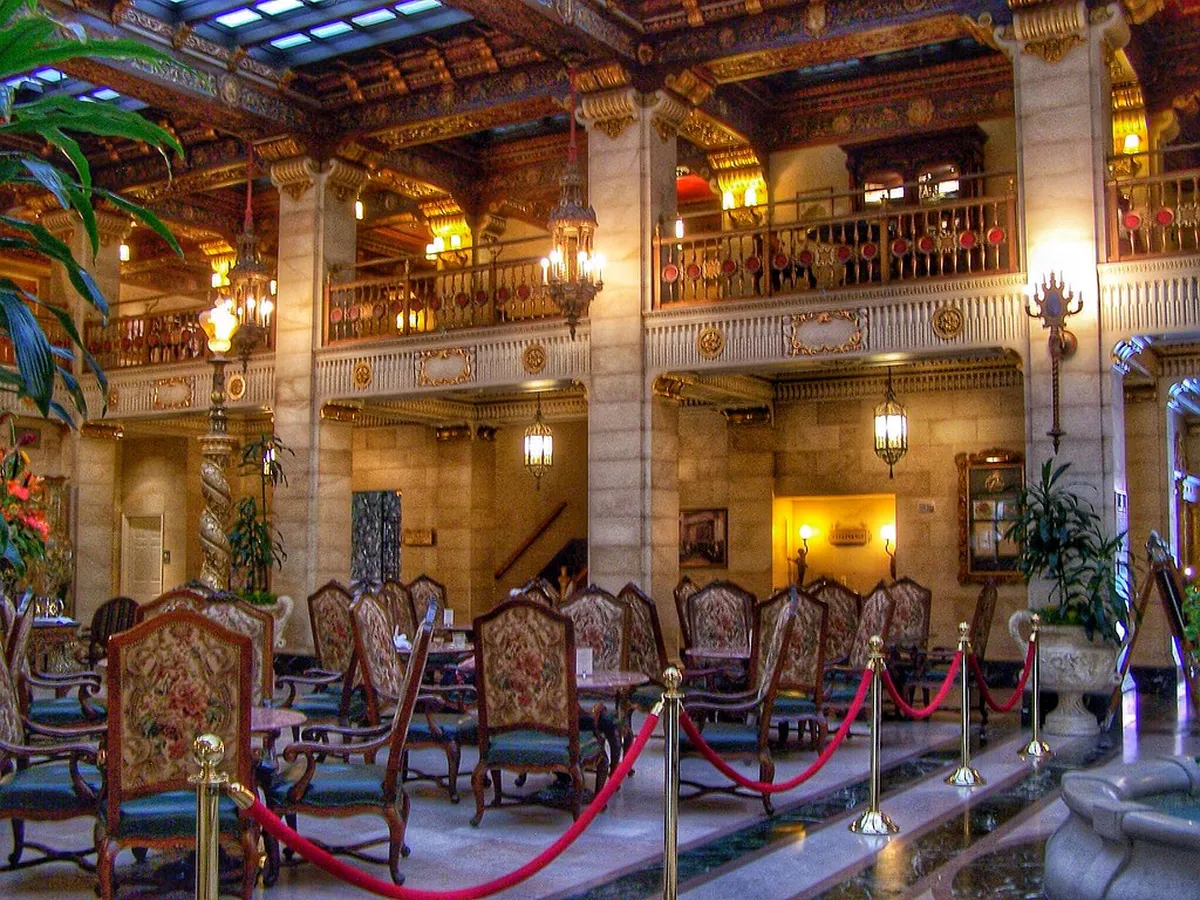
The Spanish Renaissance-style lobby anchors the building, with a fireplace kept burning year-round as a symbol of hospitality. The Peacock Lounge is the hotel's signature interior space, with a stained-glass ceiling shaped like peacock feathers; check the lounge's current operating status before anchoring a visit around it, since bar access and hotel operations can change. The hotel went through an extensive restoration in the early 2000s that paired the original architecture with modern systems.
The Davenport is best for architecture buffs and urban explorers who want a walkable downtown base with a documented design and engineering history, rather than a resort-grounds experience.
Grand Dame Resort or Urban Landmark: How to Choose
Start with the kind of history you want around you after check-in. The Broadmoor works better when the hotel is the destination. You can build the stay around resort grounds, art, golf, and a slower schedule. The Davenport works better when you want architecture, downtown movement, and a hotel that sits inside the city story. A railroad-era property works best when the route matters as much as the room. For a broader decision framework, use choosing a historic hotel before you lock in a prepaid rate.
| Best For | Hotel Style | What to Check |
|---|---|---|
| Luxury resort seekers, golfers, and art lovers (The Broadmoor) | Grand dame resort | Room category, renovation notes, golf access, Broadmoor Galleries and museum hours |
| Architecture and tech-history travelers (The Davenport) | Urban landmark | Lobby access, Peacock Lounge status, parking, downtown noise |
| Road-trippers | Railroad-era stay | Route fit, car access, historic designation, elevator setup |
| Coastal-city travelers (The Fairmont) | Landmark city hotel | Parking cost, room footprint, renovation date, transit needs |
Historic Versus Modern Comfort
Historic hotels can be more memorable than new-build luxury hotels, but the trade-offs are real. Original room footprints may be smaller. Elevators can feel slower. Plumbing, soundproofing, and hallway layouts may not match a newer resort. Renovation dates matter because they show how the property balances old materials with current guest expectations. Do not assume the most historic room is the most comfortable room. Ask what was preserved, what was rebuilt, and which rooms sit in the original building.
Booking Timing, Seasons, and Transportation
Plan to book 6 to 12 months ahead for peak seasons. That window matters most for named rooms, holiday periods, golf trips, and stays tied to major local events. Mountain properties can have winter access issues, while coastal and urban hotels may be easier to reach year-round. Many Western historic hotels work best with a car, especially when the hotel is outside a dense downtown. If you are comparing regions, keep the West separate from the East Coast hotels and the Southern hotels. Those trips often have different transit patterns, building styles, and seasonal pressures.
For peak seasons, plan around booking 6 to 12 months ahead, then use that lead time to confirm whether the room is in the original structure, a newer wing, or a named category tied to the hotel's historic appeal.
Mistakes to Avoid Before You Reserve
Avoid booking only from lobby photos. Ask whether your room is in the original structure or a newer wing. Do not assume every historic hotel has large rooms, fast elevators, or easy self-parking. Check current dining, lounge, museum, and activity status before you build an itinerary around them. Skip vague claims like old-world charm and look for named evidence: an opening year, a named architect, a preserved lobby, a museum connection, or membership in Historic Hotels of America. Those details make the stay easier to judge.
Historic Lodging Styles in the West
The best historic hotels in the West fall into a few different traditions. Knowing the style helps you choose a stay that matches the trip, not just the oldest building.
- Grand dame resorts: The Broadmoor in Colorado Springs represents the Gilded Age resort model, with Italian Renaissance-style buildings, golf, art, and destination amenities.
- Urban landmark hotels: The Davenport Hotel in Spokane fits the downtown civic model, with a Spanish Renaissance lobby and public rooms tied to city life.
- Railroad-era hotels: These properties tell the Western expansion story, especially on routes built around rail travel, national parks, and long overland journeys.
- Coastal landmark hotels: The Fairmont San Francisco works for travelers who want historic architecture with city access, transit options, and Pacific Coast trip planning.
- Boutique historic inns: Smaller Western properties trade resort scale for a handful of rooms and a stronger sense of local character. Browse regional historic-inn directories for current Western options, since specific boutique stays and their room counts change more often than large resorts.
- Frontier mining-town stays: Bisbee, Arizona is a former copper-mining town built onto steep hillsides in southern Arizona, and its preserved downtown buildings support the same small-scale, character-driven lodging style as other Western boutique inns. Planning a Bisbee weekend getaway means weighing lodging tradeoffs, parking, and the town's stairs alongside Queen Mine tour reservations, and comparing the where-to-stay options in Bisbee before you book, since room character varies more here than at a large resort.
This distinction matters because each style has different trade-offs. A resort may require more time on property. A downtown landmark may have parking limits. A railroad-era hotel may make the route feel more important than the room itself. A boutique inn may trade amenities for a more personal, intimate stay.
Frequently Asked Questions
What is the best historic hotel in the West for a luxury resort stay?
The Broadmoor is the clearest choice. It opened in 1918 and matches the grand dame resort side of Western hotel history.
What is the best historic hotel in the West for architecture?
The Davenport Hotel in Spokane is the strongest architecture pick here, with its Spanish Renaissance lobby and Peacock Lounge stained glass.
Should you book a historic hotel in the West far in advance?
Yes, especially for peak seasons. Plan to book 6 to 12 months ahead when timing, room type, or special events matter.
Are historic hotels in the West always more comfortable than newer hotels?
No. Historic rooms can have smaller footprints, slower elevators, or older layouts. Check renovation dates and room locations before booking.
Does this guide include Key West historic inns?
No. Key West is a Florida destination, and this guide focuses on the Western United States. Use it for frontier, railroad, mountain, and western city stays.
Free guide: 12 Small-Town Weekend Escapes
A practical starter list of character-filled U.S. towns, the best season to visit, and the trip shape that suits each one.
You might also like


Continue reading
More guides you'll find useful